
Dr. Ramachandra G. Naik
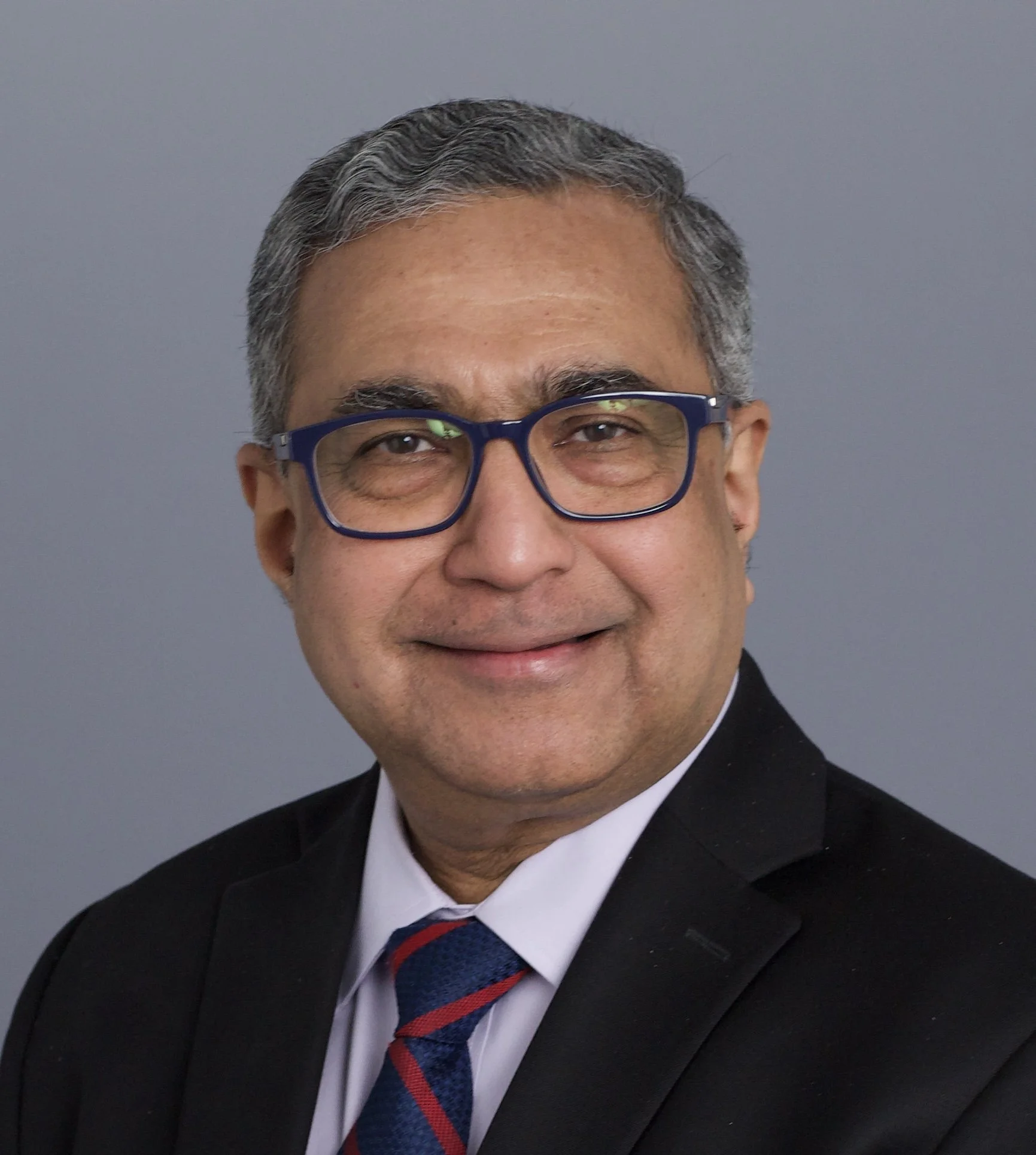
Dr. Ramachandra G. Naik, MD, DM, DNB is a board-certified endocrinologist and physician-scientist with more than three decades of global experience across patient care, clinical research, and biopharmaceutical drug development. He is currently a Clinical Professor of Medicine at NYU Langone Health and has previously held senior faculty and leadership positions at leading academic institutions across the United States. Earlier in his career, he led a nationally renowned, high-profile tertiary-care endocrinology practice for more than a decade in Mumbai, serving a geographically diverse referral population from across India, the Middle East, and East Africa. His clinical practice focuses on type 1 and type 2 diabetes, lipid disorders, obesity, osteoporosis, and thyroid disorders.
Academic Background
Postdoctoral Fellowship, Endocrinology, Metabolism and Diabetes — All India Institute of Medical Sciences (AIIMS), New Delhi, India
Postdoctoral Fellowship, Metabolism, Endocrinology and Nutrition — University of Washington School of Medicine, Seattle, WA
Professional Appointments
Clinical Professor of Medicine, Holman Division of Endocrinology, Diabetes and Metabolism — NYU Grossman School of Medicine / NYU Langone Health, New York, NY
Senior Medical Director, Global Development — Regeneron Pharmaceuticals, Inc., Tarrytown, NY
Visiting Consultant Endocrinologist — Breach Candy Hospital, Mumbai, India
Board Certifications
Dr. Naik is board certified in:
Endocrinology, Diabetes and Metabolism
Internal Medicine
Professional Memberships
Endocrine Society
American Diabetes Association
Research Society for the Study of Diabetes in India (RSSDI)
Hospital Privileges
Clinical Professor of Medicine — NYU Langone Health
New York City Health + Hospitals
Get to Know Dr. Ramachandra G. Naik
Why Did You Become a Doctor?
I have grown seeing my father practicing medicine in India, and this certainly inspired me during my formative years. Later, prior to joining medicine, I realized that the field offered something rare: work that is intellectually demanding and, at the same time, immediately useful to another person.
What Made You Focus on Endocrinology?
Endocrinology appealed to me because it combines rigorous physiology, long-term patient relationships, and the opportunity to help patients make meaningful improvements in their health over time. Diabetes and cardiometabolic disease, in particular, sit at the intersection of biology, behavior, technology, and therapeutics, which has made the field both intellectually rich and deeply human throughout my career.
What Is Your Approach to Medicine?
My career has connected patient care, academic medicine, clinical investigation, and global drug development. Working across these worlds has reinforced the importance of evidence, careful listening, and individualized treatment. I believe the best endocrine care combines scientific rigor with a practical understanding of the patient’s goals, preferences, and life circumstances.
How Would You Define Patient Care?
My approach to patient care is evidence-based, thoughtful, and highly individualized. Endocrine care often involves long-term relationships, and I value the opportunity to help patients understand their conditions, make informed decisions, and improve their metabolic and overall health. I try to bring the discipline of clinical research and drug development back to the bedside, while never losing sight of the individual patient.
Do You Do Any Philanthropic Work?
Throughout my career, both in India and the United States, health-systems permitting, I have dedicated a portion of my practice to patients from underserved communities. During my faculty tenure at the University of Pennsylvania, I served for six years as a pro bono physician at the Philadelphia VA Medical Center. I also served for four years on the American Diabetes Association's Research Grant Review Committee, helping to advance diabetes research.
Publications
Naik RG. Prevention of type 1 diabetes: the current status. Chapter 30. In: Das AK, et al, eds. Defined and Defining Moments in Diabetes Care. Bangalore, India: Micro Knowledge Academy; 2026:238–246.
Lee CH, Naik RG. The role of continuous glucose monitoring in people without diabetes: a US perspective.Chronicle of Diabetes Research and Practice. 2025;4(1):1–3.
Fariduddin MM, Naik RG. Management of lipid abnormalities in metabolic syndrome. Chapter 37. In: Mukhopadhyay S, Mondal S, eds. Metabolic Syndrome: From Mechanisms to Intervention. Elsevier; 2024:493–498.
Young KA, Snell-Bergeon JK, Naik RG, Hokanson JE, Tarullo DT, Gottlieb PA, Garg SK, Rewers M. Vitamin D deficiency and coronary artery calcification in subjects with type 1 diabetes. Diabetes Care. 2011;34:454–458.
Naik RG, Brooks-Worrell B, Palmer JP. Autoimmune diabetes in adults. J Clin Endocrinol Metab.2009;94(12):4635–4644.
Garg SK, Naik RG. Monitoring in diabetes. In: Therapy for Diabetes Mellitus and Related Disorders. 5th ed. Alexandria, VA: American Diabetes Association; 2009:144–160.
Naik RG, Beckers C, Wentwoord R, Frenken A, Duinkerken G, Brooks-Worrell B, Schloot NC, Palmer JP, Roep BO. Precursor frequencies of T-cells reactive to insulin in recent onset type 1 diabetes mellitus. J Autoimmun.2004;23:55–61.
Naik RG, Palmer JP. Latent autoimmune diabetes in adults (LADA). Rev Endocr Metab Disord. 2003;4:233–241.
Naik RG, Lernmark Å, Palmer JP. The pathophysiology and genetics of type 1 (insulin-dependent) diabetes. Chapter 20. In: Porte D Jr, Sherwin RS, Baron A, eds. Ellenberg & Rifkin’s Diabetes Mellitus. 6th ed. New York: McGraw-Hill; 2003:301–330.
Juneja R, Hirsch IB, Naik RG, Brooks-Worrell BM, Greenbaum CJ, Palmer JP. Islet cell antibodies and glutamic acid decarboxylase antibodies, but not the clinical phenotype, help to identify type 1½ diabetes in patients presenting with type 2 diabetes. Metabolism. 2001;50(9):1008–1013.
For a full list of publications, you may visit: http://library.med.nyu.edu/api/publications/?person=naikr02&sort=display_rank&in-biosketch=yes
Research
Dr. Naik is an internationally recognized expert in type 1 and autoimmune diabetes, whose early research helped define latent autoimmune diabetes in adults (LADA) as a distinct clinical entity. He has authored chapters in leading international diabetes textbooks, held research leadership roles at major academic centers, and served as principal investigator on numerous phase 1–3 trials in diabetes, obesity, and lipid disorders. He is currently Senior Medical Director at Regeneron Pharmaceuticals, providing clinical leadership to early-stage cardiometabolic drug development.
Additional details are available on his NYU Langone faculty page.
Medical Lectures & Presentations
The silent threat: prediabetes, cardiovascular risk, and the need for early action. Invited Symposium Speaker, ENDO 2026, Endocrine Society Annual Meeting, Chicago, IL, June 2026.
A quest to define LADA: a tribute to Jerry Palmer. Advances in Endocrinology, Diabetes & Metabolism, SUNY Upstate Medical University, Syracuse, NY, January 2025.
GLP-1 receptor agonists and type 1 diabetes. 20th Annual Irwin D. Mandel Advances in Cardiovascular Risk Reduction, NYU Grossman School of Medicine, New York, NY, December 2024.
Type 1 diabetes: screening, staging, and management. Invited Guest Lecture, 11th World Congress on Prevention of Diabetes and Its Complications, Mumbai, India, August 2024.
Management of hypercholesterolemia. Advances in Endocrinology, Diabetes & Metabolism, SUNY Upstate Medical University, Syracuse, NY, March 2024.
The quest to define latent autoimmune diabetes in adults. Endocrinology Grand Rounds, NYU Grossman School of Medicine and NYU Langone Health, New York, NY, January 2024.
Effective use of older oral therapies in type 2 diabetes. The Update in Diabetes Management, UW Medicine, University of Washington, Seattle, WA, March 2022.
Awards & Recognitions
Castle Connolly Top Doctors: 2024-2026
New York Magazine: Top Doctors: 2024-2025
Top AAPI (Asian American Pacific Islander) Doctors: 2025-2026
Guest of Honor, Commencement Ceremony, M. R. Medical College, Kalaburagi, India, 2017
Global Corporate Award in "Healthcare and Global Impact", 2014
Novartis Tribute Award (USA) and Novartis 'Above and Beyond' Award (India), 2011
Juvenile Diabetes Foundation International Post-Doctoral Fellowship Award, University of Washington, Seattle, WA, 1996-1998
Best Outgoing Student Award, M. R. Medical College, Kalaburagi, India, 1984
Government of Karnataka State Award, India, for First Rank in the Final Professional Medical School Examination, 1984
Medical Specialties
Prediabetes
Latent autoimmune diabetes in adults (LADA)
Hyperlipidemia (high cholesterol)
Hypertriglyceridemia
Adrenal adenomas (adrenal masses)
Congenital adrenal hyperplasia
Pheochromocytoma
Polycystic ovary syndrome (PCOS)
Hypogonadism / low testosterone
Schedule
Monday: 8:30am - 4pm
Wednesday: 12pm - 5pm
Friday: 8:30am — 4pm
New York Upper East Side
Location
Address
110 East 60th Street
Suite 802
New York, NY 10022
Get directions
Contact
Phone: (646) 917-7898
Fax: (646) 974-9714
Patient Reviews